Published: April 21, 2026 | Author: Maria Kanwal, Healthcare SEO Strategist
The Quiet Revolution Happening Through ChatGPT in Healthcare, in Every Doctor’s Waiting Room
11:30 p.m. Your chest is constricted. Your family physician’s clinic is closed. What are you doing?
ChatGPT in healthcare is the solution for an increasing number of Americans.
Over 580,000 healthcare-related messages are sent to ChatGPT each week from underprivileged rural communities alone—communities often referred to as “hospital deserts”—according to a groundbreaking OpenAI discovery. In total, healthcare-related topics account for over 5% of all global ChatGPT interactions, or billions of conversations every week. There is no slowdown in that number.
One in four of ChatGPT’s 800 million+ regular users submits a healthcare prompt each week. Additionally, almost 70% of those discussions take place outside regular clinic hours through ChatGPT in healthcare when no clinician is on hand to respond.
There is no pattern here. The way patients look for, evaluate, and use health information has changed structurally. Additionally, it has significant ramifications for SEO experts, healthcare providers, and anybody attempting to connect with people online.
ChatGPT in Healthcare: Fast Fact
According to an OpenAI poll, three out of five American people utilised an AI tool for medical or health-related queries within the previous three months. 55% utilised it to verify symptoms, 48% to comprehend medical jargon, and more than 40% to find out about available treatments. (December 2025, OpenAI)
What Are Patients Actually Asking ChatGPT About?
We may learn a lot about the inadequacies in conventional healthcare communication from the unusually wide variety of patient enquiries.
Symptom Checking and Triage
Symptom assessment is by far the most prevalent use case. Patients ask ChatGPT if they should attempt home treatments, wait for an appointment, or require urgent care after describing their symptoms in natural language. According to a 2025 Science Direct research, ChatGPT-4o fared better than family doctors in terms of accuracy, appropriateness, and empathy while answering 200 typical health queries.
Understanding Medical Jargon
Prescription instructions, test reports, and discharge summaries are notoriously hard to interpret. For clear answers, patients copy and paste unclear medical jargon into ChatGPT. Because ChatGPT’s multilingual features fill up major communication gaps, this use case is particularly beneficial for non-English users.
Insurance and Billing Navigation
Every week, ChatGPT receives about two million messages on health insurance, including queries about eligibility, comprehending claims, comparing plans, and cost-sharing information. The healthcare establishment has long neglected this issue.
Mental Health Support and Information
Additionally, patients are using AI to get mental health advice, especially after hours or in areas with limited access to mental health care. ChatGPT offers an initial point of contact that many people would not otherwise have, even if it cannot take the place of a licensed therapist.
Medication Information and Side Effects
Drug doses, interactions, and adverse effects are among the most often asked questions. ChatGPT serves as a fast reference for patients who are uncertain whether a new prescription is compatible with their current drugs.
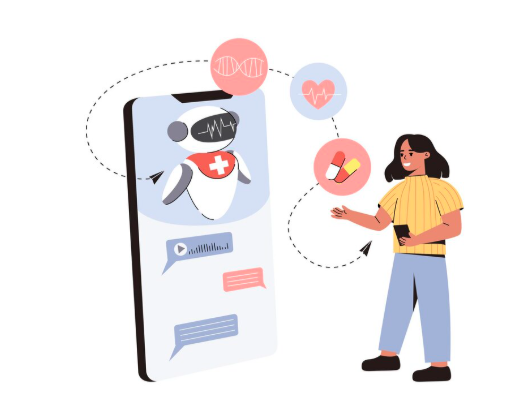
ChatGPT Health: OpenAI’s Official Move Into Medical Territory
With the launch of ChatGPT Health, a special health-focused tab within the ChatGPT platform, on January 7, 2026, OpenAI formally joined the healthcare industry. For tailored, contextual responses, users may now sync test results, patient portal records, Apple Health data, and wellness app information.
OpenAI worked with more than 260 doctors to incorporate safety precautions into ChatGPT Health’s answers. In order to safeguard sensitive health information, the platform functions in a secure, isolated environment and highlights that it is a support tool rather than a diagnostic authority.
This is a seismic signal for SEO experts and healthcare marketers: AI is no longer only where consumers look for medical information. Patients are increasingly interacting with their own medical data using it as their main interface.
Important Note for Patients
ChatGPT Health is intended solely as a preparation and informative tool. It is not a regulated clinical system and should never be used in place of licensed clinical counsel, emergency care, or expert medical diagnosis.
5 Ways ChatGPT Is Fundamentally Changing Patient Queries
1. From Keyword Searches to Conversational Dialogue
ChatGPT reacts to the following dialogue: “I’ve had a sharp pain on the left side of my chest for two days that gets worse when I breathe in — what could this be, and when should I go to the ER.” Conventional search engines react to phrases like “chest pain causes.”Healthcare content must now be created in natural, explanatory language rather than merely keyword-stuffed paragraphs due to the transition from short-form keyword enquiries to long-form conversational suggestions.
2. From Single-Source to Multi-Turn Exploration
Patients who use ChatGPT engage in dialogue rather than receive a single response. They probe more, make clarification requests, and ask follow-ups. This approach is similar to how a successful clinical consultation operates. Content strategy concludes that shallow pieces will not perform as well as those that delve deeply into a subject and anticipate follow-up queries.
3. From Clinic Hours to 24/7 Availability
Seventy percent of ChatGPT discussions on health take place after clinic hours. Patients are making judgements in real time: should they wait until the morning or visit the emergency room? — using AI as a guide for triage. Healthcare providers are capturing consumers at their most motivated time when they optimize information to address these high-stakes, after-hours queries.
4. From Urban Access to Rural Equity
ChatGPT healthcare usage is disproportionately high in hospital deserts, which are places with little access to in-person treatment. The states with the highest per-capita use are South Dakota, Wyoming, and Montana. AI is emerging as a tool for healthcare fairness, bridging gaps left by the conventional system. For telehealth providers and rural health brands, this creates an opportunity for spatially focused content.
5. From Anonymous Browsing to Personalized Health Dialogue
Patient inquiries are becoming more individualised than they were with traditional search because of ChatGPT Health’s integration of personal medical information and wellness data. What does my diagnosis of Type 2 diabetes entail in relation to my latest three lab results? It is a question that no search engine has ever been able to respond to. AI can.
The Genuine Benefits: What ChatGPT Does Well in Healthcare
The research is becoming more and more evident. A thorough 2025 systematic study that was published in Frontiers in Artificial Intelligence discovered notable, proven advantages in a number of healthcare domains:
- 70% decrease in administrative time for the creation of discharge summaries
- 60% accuracy on the USMLE (United States Medical Licensing Examination), which corresponds to baselines for medical professionals
- 78.2% accuracy on the biomedical question-answering benchmark PubMedQA
- Enhanced health knowledge and patient involvement, especially for marginalized groups
- Multilingual communication that lessens healthcare disparities for people who don’t speak English
- 24/7 accessibility that connects clinic visits with continuous chronic illness care
- Individualized medication reminders and instructional follow-ups to increase compliance
ChatGPT vs. Family Physicians: What the Research Shows
ChatGPT-4o and family doctors were compared on 200 primary care questions in an observational study published in ScienceDirect in 2025. The results were startling: ChatGPT-4o produced more thorough (although lengthier) replies while outperforming doctors in accuracy, appropriateness, and empathy scores. Researchers came to the conclusion that by combining AI efficiency with indispensable human knowledge and contextual judgement, hybrid AI-physician models might maximise primary care.
The Real Risks: Why ChatGPT Cannot Replace Your Doctor
Despite all of its features, ChatGPT has important established limitations that all patients and healthcare professionals need to be aware of.
Hallucinations and Medical Inaccuracies
AI researchers refer to ChatGPT’s ability to produce replies that are confident, fluid, and factually incorrect as “hallucination.” In the context of healthcare, this might involve citations to nonexistent research, out-of-date treatment methods, and inaccurate medicine doses. According to a scoping study published in Health Science Reports, the most commonly mentioned issues across all research employing ChatGPT in healthcare were accuracy and knowledge gaps.
No Emotional Intelligence or Clinical Empathy
At its core, healthcare is a human interaction. Patients want compassion, confidence, and the framework of a trustworthy relationship in addition to factual information. The empathy of a doctor who is familiar with a patient’s background, anxieties, and family circumstances cannot be replicated with ChatGPT. This is regularly identified as a fundamental weakness by research.
Privacy and Data Security Concerns
There are valid privacy concerns when sensitive health information is shared with any AI technology. OpenAI is not covered by HIPAA in the same manner as a clinical provider, notwithstanding ChatGPT Health’s improved data isolation. When entering personal health information, patients should use caution.
Algorithmic Bias
The biases present in historical data may be reinforced by AI models trained on such data. ChatGPT may display racial bias in clinical advice, according to research published in npj Digital Medicine. This is a serious worry in a healthcare system that already has equity disparities.
The Automation Bias Risk
Patients may depend too much on AI replies without critically analysing them if they sound authoritative. This “automation bias”—accepting AI outputs without question—is especially risky in the medical field, where a seemingly right response might have life-altering repercussions.
How Healthcare Brands Should Respond: SEO & AI Overview Strategy for 2026
The increase in ChatGPT healthcare searches is an SEO story as well as a clinical one. Here are some strategies for medical content producers and healthcare marketers to stand out in this new AI-driven search environment.
Win Google AI Overviews with E-E-A-T
Content that exhibits Experience, Expertise, Authoritativeness, and Trustworthiness (E-E-A-T) is given priority by Google’s AI Overviews, particularly when it comes to YMYL (Your Money or Your Life) subjects like health. Every health publication should provide author profiles with qualifications, references to peer-reviewed research, and details about medical reviewers.
Structure Content for AI Parsing
AI technologies, such as Google’s AI Overviews and ChatGPT online search, extract responses from text that is clearly structured. Use bullet points, FAQ schema markup, brief direct responses at the start of each section, and H2/H3 headings worded as queries (‘What are patients asking ChatGPT about?’). Write your best, most citable material first, since, according to research, 44.2% of all LLM citations originate from the first 30% of a piece.
Target Conversational and Long-Tail Keywords
Natural queries are now more common in patient searches than keywords. Target terms such as “can I use ChatGPT for medical symptoms,” “is ChatGPT safe for health questions,” “what does ChatGPT say about [condition],” and telehealth provider location-specific questions. For these conversational enquiries, voice search optimisation is becoming more and more crucial.
Build Topical Authority Through Content Clusters
AI search authority is not developed by a single blog article. Make content clusters that connect relevant articles, such as a hub page on AI in healthcare that links to particular pieces like AI and patient triage, AI and mental health, AI medical privacy, and AI vs. physicians. Both Google and AI search engines receive this as an indication of thorough thematic expertise.
Earn Citations Across the Web
According to SE Ranking research, websites having profiles on review sites like Yelp, G2, and Trustpilot are three times more likely to be mentioned by ChatGPT. AI citations can rise by up to 325% when content is distributed to several journals. Alongside your on-site SEO, develop a PR and content distribution plan.
Conclusion: AI Is Changing Healthcare. Is Your Brand Keeping Up?
AI and ChatGPT won’t take the place of physicians. They are increasingly serving as a patient’s initial point of contact—the “11 PM triage call” that the healthcare system was never intended to offer.
Patients now have unparalleled access to health information, which has both significant advantages for marginalised populations and real hazards for those who could depend too much on AI without physician supervision.
It is the biggest change in patient search behaviour since Google overtook WebMD as the most popular symptom checker globally, according to digital marketers, SEO experts, and healthcare businesses.
The future generation of patients will trust the practices, hospitals, and health content companies who modify their SEO approach now—creating E-E-A-T-rich, AI-parseable, topically authoritative material—because they will be mentioned in ChatGPT answers and highlighted in Google AI Overviews.
The issue of whether AI will alter healthcare is no longer relevant. It has already done so. Will patients be able to locate you when they search?
Want Your Healthcare Brand to Rank in Google AI Overviews?
From Google AI Overviews to ChatGPT citations, Maria Kanwal of MedRank SEO assists healthcare firms in dominating AI-powered search. Get a free, practice-specific SEO evaluation.
Email Maria at medrankseo@gmail.com.
Looking for done-for-you healthcare SEO? MedRankSEO offers expert SEO services for medical practices. Let’s make your medical material accessible to both patients and AI.
Frequently Asked Questions (FAQ)
The Google AI Overview and Featured Snippet capture FAQ section is organised as follows:
Is ChatGPT reliable for medical advice?
Although ChatGPT can explain medical jargon and offer helpful general health information, it cannot replace a professional medical diagnosis. It is unable to conduct a physical examination, lacks real-time clinical data, and may generate erroneous reactions (hallucinations). When making decisions on a diagnosis or course of treatment, always seek the advice of a qualified healthcare professional.
What percentage of people use ChatGPT for health questions?
One in four of ChatGPT’s 800+ million regular users submits a healthcare-related query per week, according to OpenAI’s 2025 statistics. Three out of five American adults utilised an AI tool for health-related concerns in the previous three months, according to an OpenAI poll.
What is ChatGPT Health?
On January 7, 2026, OpenAI introduced ChatGPT Health, a specialised health-focused function. For individualised health information, it enables users to synchronise test results, wellness app data, and patient portal records with ChatGPT. It is not a controlled clinical system; rather, it is only an instructional tool.
Can ChatGPT diagnose medical conditions?
No. Medical issues cannot be diagnosed via ChatGPT. It does not specifically replace clinical diagnosis, but it may explore symptoms, give broad information on illnesses, and assist users in preparing questions for their doctor. ChatGPT Health from OpenAI makes this distinction very evident.
Why do patients use ChatGPT instead of calling their doctor?
Outside of clinic hours, almost 70% of healthcare ChatGPT discussions take place. When their doctor’s office is closed, they live in underprivileged regions with limited access to healthcare, or they need to grasp health information before or following a clinical visit, they turn to AI.
Is ChatGPT better than Google for health questions?
ChatGPT frequently offers more thorough and understandable answers to conversational, multi-part health concerns than Google’s conventional search results. But Google’s AI Overviews now incorporate reliable sources as well. Professional medical advice should always be supplemented, not replaced, by these tools.
Sources & Citations
SE Ranking / Ahrefs AI SEO Statistics, 2025-2026
OpenAI Healthcare Usage Report, December 2025 / January 2026
Tangsrivimol et al. ‘Benefits, Limits, and Risks of ChatGPT in Medicine.’ Frontiers in Artificial Intelligence, January 2025
Ghasemi et al. ‘Advantages and Limitations of ChatGPT in Healthcare: A Scoping Review.’ Health Science Reports / Wiley, 2025
Iqbal et al. ‘Impact of Large Language Model (ChatGPT) in Healthcare: An Umbrella Review.’ BMC, May 2025
‘AI in Primary Care: Comparing ChatGPT and Family Physicians.’ ScienceDirect / Nurse Education in Practice, 2025
‘The Ethics of ChatGPT in Medicine and Healthcare.’ npj Digital Medicine / Nature, 2024
Healthcare Finance News: ‘Consumers Are Increasingly Turning to ChatGPT for Healthcare Answers.’ January 2026
Fierce Healthcare: ‘US Patients Are Turning to ChatGPT to Navigate Healthcare.’ January 2026
Medical Economics: ‘OpenAI Launches ChatGPT Health.’ January 2026
WG Content: ‘How AI Search Ranks Healthcare Content: A ChatGPT vs. Google Experiment.’ November 2025