Patient Education Content: The Complete Guide to Creating Health Resources That Inform, Engage, and Convert (2026)
Patient education content is one of the most powerful and underutilised tools in healthcare marketing. At its best, it does something no other form of content can, as it genuinely helps people understand their health, make better decisions, and engage more confidently with their care. At the same time, high-quality patient education content ranks exceptionally well on Google, builds deep patient trust, and drives the kind of patient acquisition that compounds over time.
Yet most healthcare organisations approach patient education as an afterthought — publishing generic condition leaflets, templated FAQs, or thinly-veiled promotional content that neither educates patients nor ranks in search. The gap between average and excellent patient education content represents one of the greatest competitive opportunities in healthcare marketing today.
This guide covers everything you need to create patient education content that genuinely serves patients, satisfies Google’s strictest quality standards, ranks for high-intent health queries, and converts informed readers into engaged, loyal patients. It is built for healthcare marketers, clinic content teams, and health writers who want to create resources that actually make a difference.
Quick Answer: High-performing patient education content in 2026 is clinically accurate, written at an accessible reading level (7th–9th grade), authored or reviewed by qualified healthcare professionals, structured for the specific questions patients are actually asking, and optimised for both traditional search and AI-powered search features like Google’s AI Overviews.
What Is Patient Education Content?
Patient education content is any written, visual, or interactive material designed to help patients understand health conditions, treatment options, preventive care, and healthcare processes. It spans a wide range of formats — from clinical condition guides and treatment explainers to post-procedure care instructions, medication guides, lifestyle modification resources, and FAQ articles.
The defining characteristic of patient education content is that its primary purpose is to serve the patient—not to promote a product, fill a website, or satisfy a content calendar. When patient education is genuinely designed around patient needs, it naturally produces the type of content that ranks, earns trust, and drives patient engagement.
The Strategic Value of Patient Education Content
- Drives organic search traffic — patients actively search for health education at every stage of their journey
- Builds E-E-A-T authority—expert-authored patient education is exactly what Google rewards for YMYL queries
- Reduces clinical workload — well-designed patient education decreases repetitive patient questions and improves consultation efficiency
- Improves clinical outcomes — informed patients follow treatment plans more consistently and report better care experiences
- Drives patient conversion — patients who have been educated by your content associate your brand with the expertise they encountered
- Supports patient retention — ongoing health education keeps patients engaged with your brand between appointments
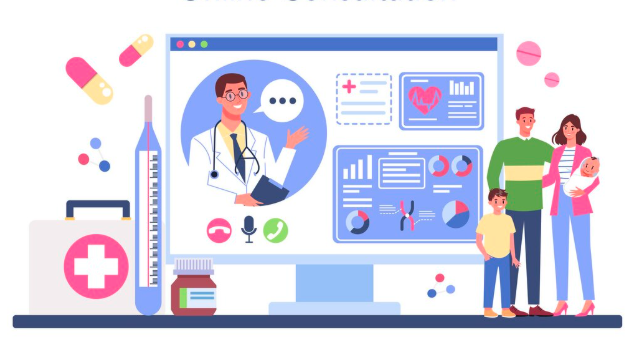
Understanding Your Patient Education Audience
The single biggest failure in patient education content is writing for the wrong audience. Most healthcare content is written at too high a reading level, assumes too much prior medical knowledge, and fails to account for the emotional state of someone who is worried about their health.
Health Literacy and Reading Level
The average adult in the UK and the US reads at approximately a 7th–8th grade level. When people are anxious or unwell, their ability to process complex information decreases further. Yet studies consistently show that the average health website publishes content at a 12th-grade reading level or higher. This gap means that a significant proportion of your intended audience cannot effectively access your patient education resources.
Target a 7th–9th grade reading level for all general patient education content. Use short sentences (average 15–18 words), common vocabulary, active voice, and concrete examples. Define every medical term when you first use it. Do not talk down to patients — write clearly and respectfully, at a level they can absorb when their mind is on their health.
The Emotional Context of Health Information Seeking
Patients seeking health education are rarely in a neutral emotional state. They may be frightened by a new diagnosis, confused by conflicting information, anxious about an upcoming procedure, or overwhelmed by a complex treatment decision. Patient education content must acknowledge this emotional context — providing not just information, but reassurance, clarity, and a clear signal that help is available.
This does not mean being vague or avoiding difficult clinical realities. It means framing information in a way that is honest, compassionate, and actionable. A patient reading about a cancer diagnosis does not need false reassurance — they need accurate information, clear next steps, and a signal that expert support is available.
Mapping Content to the Patient Journey
Awareness Stage: The patient is experiencing symptoms and searching for possible explanations. Content needs clear symptom descriptions, accessible condition overviews, and when-to-seek-care guidance. The tone should be reassuring, informative, and non-alarmist.
Consideration Stage: The patient has a diagnosis or suspected diagnosis and is researching treatment options. Content needs treatment comparisons, procedure explanations, and specialist role descriptions. The tone should be balanced, evidence-based, and empowering.
Decision Stage: The patient is choosing a provider or treatment path. Content needs to explain what to expect, how to prepare, and what questions to ask. The tone should be practical, warm, and confidence-building.
Active Care Stage: The patient is undergoing treatment and needs support. Content needs procedure preparation guides, recovery timelines, medication management, and side effect information. Tone should be detailed, reassuring, and action-oriented.
Post-Care Stage: The patient has completed treatment and needs ongoing health maintenance guidance. Content needs lifestyle modification resources, follow-up care schedules, signs of complications, and preventive care reminders. Tone should be encouraging, empowering, and supportive.
The Anatomy of High-Performing Patient Education Content
There is a clear, repeatable structure that characterises patient education content that both ranks well and genuinely serves patients. Understanding and consistently applying this structure is the foundation of a successful patient education content programme.
The Opening: Answer First, Explain Second
Every patient education article should open with a direct, clear answer to the question implied by its title — within the first 100 words. Patients arriving from searches are busy, often anxious, and want to confirm immediately that they have found what they are looking for. An article titled ‘What Is Endometriosis?’ should open with a clear, accessible definition of endometriosis before moving into a detailed explanation.
This ‘answer first’ structure also positions your content favourably for Google’s AI Overviews and featured snippets, both of which extract concise, direct answers from article content. If your article buries its main answer in paragraph five, it will lose these positions to competitors who answer immediately.
Logical Information Architecture
Patient education articles should be structured in the logical order a patient would need the information — not the order that feels natural to a clinician. For a condition guide, this typically means: What is it? Who does it affect? What causes it? What are the symptoms? How is it diagnosed? What are the treatment options? When should I see a doctor? What questions should I ask my doctor? This patient-centric structure aligns with the order of questions patients actually ask, which in turn aligns with the keyword clusters that drive search traffic.
Clinical Accuracy With Accessible Language
The best patient education content is simultaneously clinically accurate and accessibly written. This is harder to achieve than it sounds, and it is why clinical review by a qualified healthcare professional is non-negotiable for any patient education that touches on symptoms, diagnosis, or treatment. A medical reviewer does not just check facts—they ensure that accurate information is presented in a way that cannot be misinterpreted by patients and will not lead to harmful self-treatment decisions.
Actionable Next Steps
Every patient education article must end with clear, actionable guidance. What should the patient do with this information? When should they see a doctor? What questions should they bring to their next appointment? What lifestyle changes should they consider? What resources can they access for additional support? Patient education that informs without empowering to act fails its fundamental purpose.
Clear Medical Disclaimer and Call to Action
Every patient education page must include a medical disclaimer clarifying that the content is general health information and not a substitute for individualised medical advice. This disclaimer is both a patient safety requirement and an E-E-A-T trust signal. Pair the disclaimer with a warm, clear call to action — inviting patients to consult with a clinician, book an appointment, or contact the practice for personalised guidance.
Patient Education Content Formats for Every Channel
Patient education is not limited to written articles. The most effective patient education programmes use multiple formats to reach patients across different channels and stages of their journey.
Condition and Symptom Guide Articles
The workhorse of patient education content strategy. Long-form, clinically reviewed articles covering specific health conditions from every angle. These rank for the broadest range of patient queries, build the deepest topical authority, and serve patients across awareness, consideration, and decision stages. The optimal length should be 1,500–3,000 words for comprehensive condition guides.
Treatment and Procedure Explainers
Articles explaining specific medical treatments, procedures, and interventions in patient-friendly language. These serve patients in the consideration and decision stages and are particularly valuable for elective or complex procedures where patient understanding and confidence directly affect treatment uptake. Include what the procedure involves, how to prepare, what happens during and after, expected recovery, and when to contact the clinical team.
FAQ Pages and Q&A Content
FAQ pages compiled from the questions patients most commonly ask in consultations are among the highest-performing patient education formats for search. They naturally target the ‘People Also Ask’ and question-format queries that dominate health search. Structure FAQs with concise answers (50–150 words each) and implement the FAQ Page schema to maximise search feature eligibility.
Infographics and Visual Patient Education
Visual content improves comprehension and recall for complex health information. Infographics explaining medication schedules, treatment pathways, anatomical diagrams, or lifestyle modification frameworks are highly shareable, earn backlinks, and serve patients who learn more effectively through visual formats. Include complete alt text and a text alternative for accessibility and SEO.
Video Patient Education Content
Video is the fastest-growing patient education format. Patients are significantly more likely to watch a 3-minute video explanation of their condition or procedure than to read an equivalent text article. Clinician-narrated videos build personal trust and demonstrate the expertise of your clinical team in a way that text cannot replicate. Ensure every video is accompanied by a full text transcript for SEO and accessibility.
Downloadable Patient Resources
Printable patient leaflets, post-procedure care guides, medication logs, and health tracking tools serve patients in the active care stage and create tangible touchpoints with your brand that extend beyond the digital session. These resources are also excellent for generating backlinks — other healthcare websites and patient advocacy organisations link to genuinely useful downloadable patient tools.
SEO Optimisation for Patient Education Content
Patient education content and SEO are natural allies. The questions patients ask in search are the same questions patient education content is designed to answer. Optimising your patient education for search is not a compromise of quality — it is a recognition that well-structured, clearly written, expert-reviewed patient education naturally contains the signals Google rewards.
Keyword Research for Patient Education Topics
Patient education keyword research starts with the questions your clinical team hears most often. These real patient questions—’How long does recovery take after a hysterectomy,’ ‘what can I eat with Crohn’s disease,’ ‘will I need anaesthesia for a colposcopy’ — are exactly the queries patients type into search engines. Compile these questions from your clinical team, your patient communication records, and the ‘People Also Ask’ boxes that appear for your condition-related keywords.
Layer this qualitative insight with quantitative keyword research to identify the specific phrasing patients use, the search volumes involved, and the competition level. Prioritise patient education topics that combine high search volume, clear informational intent, and an underserved quality of existing content in the search results.
On-Page SEO for Patient Education Articles
- H1 title: Clear, patient-centric, includes primary keyword — ‘What Is Endometriosis? Symptoms, Causes, and Treatment’
- Meta description: 150–160 characters, includes keyword and a clear patient benefit — what the reader will learn or gain
- First 100 words: Directly addresses the primary patient question and includes the primary keyword
- H2 headings: Map to the key sub-questions patients have about the topic — structure mirrors the patient thought process
- Internal links: Every article links to 3–5 related patient education articles and to the relevant service or appointment page
- External links: 2–3 citations to authoritative sources — NICE guidelines, NHS resources, peer-reviewed studies
- Author and reviewer attribution: Named, credentialled clinical author or reviewer displayed prominently
- Schema: MedicalWebPage, Article, Person, and FAQPage schema implemented on every article
- Last reviewed date: Visible and current — medical content older than 12 months without a review date loses credibility
Optimising Patient Education for AI Search
AI-powered search tools increasingly surface patient education content directly in search results, providing synthesised health answers to patient queries. For your patient education to be featured, write concise, direct answers to each sub-question at the start of each section; use FAQ sections with question-format headings that mirror actual patient search queries, implement FAQPage schema; and ensure your domain has strong E-E-A-T signals that AI systems can verify through structured data and external citations.
E-E-A-T Best Practices for Patient Education Content
Patient education content sits squarely in Google’s YMYL category. Every article that addresses symptoms, diagnoses, treatments, or health recommendations must demonstrate strong E-E-A-T signals to rank competitively and to genuinely deserve patient trust.
Medical Authorship and Review Standards
Every patient education article covering clinical health information must be authored by or reviewed by a qualified healthcare professional whose credentials are relevant to the specific topic. The standard for patient education E-E-A-T is a named author with credentials displayed, named medical reviewer with specialty indicated, original publication date, and last medically reviewed date. These four elements should appear on every patient education article as a standard template requirement, not a case-by-case decision.
Clinical Citation Standards
Patient education content should cite authoritative clinical sources for all factual health claims. In the UK context, primary sources include NICE guidelines, NHS clinical information, Royal College guidelines, and peer-reviewed research from reputable medical journals. In the US context, NIH, CDC, major clinical guidelines bodies (ACC, ACOG, ADA), and PubMed-indexed research. Secondary sources — health blogs, news articles, non-peer-reviewed websites — should not be used as citations for clinical claims in patient education.
Editorial Review and Update Process
Medical guidelines evolve. Drug recommendations change. Research advances understanding of conditions that were previously poorly characterised. Patient education content must be kept current to remain accurate, trustworthy, and E-E-A-T compliant. Implement a formal content review schedule, annually for stable condition guides, immediately when major new clinical guidelines are published for relevant topics, and quarterly for rapidly evolving areas such as oncology treatments or infectious disease guidance.
Measuring Patient Education Content Performance
Patient education content performance should be tracked across four dimensions: search visibility, patient engagement, clinical utility, and patient acquisition.
Search Performance Metrics
- Organic impressions and clicks for target patient education keywords (Google Search Console)
- Average position for primary patient question keywords — target top 5 positions
- Featured snippet and AI Overview capture rate for question-format queries
- Click-through rate improvements from meta title and description optimisation
Patient Engagement Metrics
- Average time on page — high-quality patient education should retain readers for 3–5+ minutes on long-form articles
- Scroll depth — what percentage of patients read to the bottom of the article
- Return visitor rate — patients who find your education genuinely useful return
- Social shares and bookmarks — signals content patients find worth saving and sharing
Patient Acquisition Metrics
- Organic-to-appointment conversion rate for patient education landing pages
- Assisted conversions — patient education articles read in the session before a conversion
- New patient attribution to organic channels driven by education content
- Email newsletter sign-ups from patient education content readers
Common Patient Education Content Mistakes to Avoid
Writing for clinicians, not patients: Using medical jargon without explanation, assuming prior clinical knowledge, and structuring information in a clinical rather than patient-centric order.
- Fix: Always write the first draft as if explaining to a concerned family member with no medical background.
Ignoring the emotional dimension: Publishing information-dense, emotionally flat content that fails to acknowledge the anxiety or concern that brings most patients to health content.
- Fix: Open every article with an acknowledgement of the patient’s experience, and close with warm, empowering guidance.
Thin content on complex topics: Publishing 400-word articles about conditions that require comprehensive coverage to genuinely serve patients and rank competitively.
- Fix: Commit to genuine depth on every patient education topic — match the comprehensive coverage patients need, not the minimum word count that might rank.
No clear next step: Educating patients without telling them what to do with that education.
- Fix: Every article needs a clear, specific, warm call to action aligned with the patient’s stage in the care journey.
Publishing without review dates: Medical information ages rapidly and unlabelled content erodes patient trust.
- Fix: Every article should display its creation date and last-reviewed date as a standard template element.
Your Patient Education Content Launch Roadmap
Month 1: Foundations
- Audit existing patient education content for accuracy, reading level, E-E-A-T compliance, and SEO performance
- Identify your top 10 most-searched patient questions across your primary service areas
- Establish author and reviewer relationships and create clinical contributor page templates
- Publish 4 comprehensive condition guides for your highest-volume patient queries
Month 2: Expansion
- Add 8 treatment and procedure explainer articles across your service lines
- Build FAQ pages for your top 5 most-asked patient questions by service area
- Implement the FAQPage and MedicalWebPage schema across all published patient education
- Begin systematic content promotion through your patient newsletter and social channels
Month 3: Authority and Conversion
- Publish 2 downloadable patient resources linked from high-traffic education articles
- Add internal links from education articles to relevant appointment booking or consultation pages
- Set up patient education performance tracking in Google Analytics and Search Console
- Conduct the first quarterly review of patient education performance and plan the next content priorities
Frequently Asked Questions About Patient Education Content
What reading level should patient education content be written at?
General patient education content should target a 7th–9th grade reading level. Use short sentences, common vocabulary, active voice, and define all medical terms on first use. Tools like the Flesch-Kincaid Grade Level calculator in Word or Hemingway Editor can help you verify reading level before publishing.
Does patient education content need medical review?
Yes, without exception. Any patient education content that addresses symptoms, diagnoses, treatments, medications, or preventive care recommendations must be reviewed by a qualified healthcare professional before publication. Publishing unreviewed clinical health information is both an E-E-A-T failure and a patient safety concern.
How long should patient education articles be?
Comprehensive condition guides and treatment explainers should be 1,500–3,000 words to genuinely cover the topic and rank competitively. FAQ articles can be shorter. Never pad content to reach a word count — every sentence should add genuine patient value. Content that is long enough to fully serve the patient will naturally be long enough to rank.
How often should patient education content be updated?
All patient education content should be formally reviewed annually. Content covering rapidly evolving clinical areas — oncology, infectious disease, new medications — should be reviewed more frequently. Any time NICE, NHS, or equivalent clinical bodies issue new guidance relevant to your content, that content should be updated promptly.
How do I measure whether patient education content is working?
Track organic traffic and keyword rankings to measure search performance, time on page and scroll depth to measure patient engagement, and conversion rates from education content to appointment bookings to measure patient acquisition impact. The combination of all three tells the complete story of patient education content value.
Conclusion: Patient Education Is Your Most Valuable Long-Term Content Investment
Patient education content does something that no other form of healthcare marketing can fully replicate: it serves patients at the moment they most need help, builds genuine trust through genuine value, and creates an organic presence that grows stronger with every article published, every guideline updated, and every patient question answered.
The healthcare organisations that invest seriously in patient education — with clinical expertise, genuine patient focus, technical SEO rigour, and consistent publication — build content assets that generate patient acquisition, brand trust, and clinical outcomes for years to come. The investment is real, but so is the compounding return.
Start with your patients’ most pressing questions. Write the articles your clinical team wishes every patient would read before their appointment. Review them with your best clinicians. Optimise them for the search queries your patients actually use. Publish them with the transparency and authority that earns both patient trust and Google’s recognition. That is patient education that works — for patients, and for your organisation.
Turn your patient education into your most powerful growth engine. At MedRank SEO, we create clinically accurate, AI-optimised content that ranks on Google, builds trust, and converts readers into loyal patients.
From in-depth condition guides to high-converting patient FAQs and women’s health content — we help healthcare brands dominate search while genuinely educating their audience.
Ready to grow with smarter healthcare content?
Contact us today at medrankseo@gmail.com and let’s build content your patients trust — and Google ranks.