Pimple-Like Bump on the Vulva: Is It Normal or Cancer?
Quick Answer
Most pimple-like bumps on the vulva are harmless. They are usually ingrown hairs, clogged glands, cysts, or infections that clear up on their own or with simple treatment. Rarely, a bump is an early sign of vulvar cancer or precancer. A bump that lasts more than 4 weeks, grows, bleeds, itches constantly, or looks different from the surrounding skin should be examined by a doctor.
What Is a Pimple-Like Bump on the Vulva?
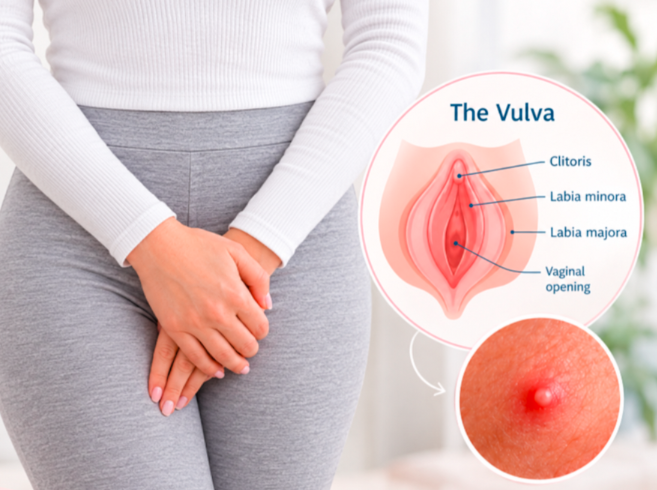
The vulva is the external female genital area:
- Labia majora
- Labia minora
- Clitoris and vaginal opening.
The skin here has hair follicles, oil glands, and sweat glands, so it can develop pimples, cysts, and bumps just like the rest of your skin. Many women find a bump on the labia or vulva at some point.
Common (Non-Cancerous) Causes of Bump on the Vulva
| Cause | What it looks/feels like |
| Folliculitis / ingrown hair | Small red bump, sometimes with a pus head; common after shaving or waxing |
| Bartholin’s cyst | Painless or tender lump near the vaginal opening; can become an abscess |
| Sebaceous (epidermoid) cyst | Smooth, slow-growing, round lump under the skin |
| Fordyce spots | Tiny, painless, yellow-white dots; normal and harmless |
| Genital warts (HPV) | Flesh-colored or gray, rough, cauliflower-like bumps |
| Molluscum contagiosum | Small, firm, dome-shaped bumps with a central dimple |
| Genital herpes | Painful blisters or sores that crust over |
| Skin tags | Soft, flesh-colored, painless flaps of skin |
| Lichen sclerosus | White, thin, itchy patches; raises cancer risk if untreated |
| Hidradenitis suppurativa | Recurrent painful, deep boils in skin folds |
| Syphilis chancre | A single painless sore, often overlooked |
Vulvar Cancer: What You Should Know
Vulvar cancer is uncommon, but early detection makes it highly treatable. Most cases are squamous cell carcinoma. Other types include melanoma, Paget’s disease of the vulva, and Bartholin gland cancer.
Risk factors
- Persistent high-risk HPV infection (especially HPV 16)
- Lichen sclerosus or long-term vulvar skin conditions
- Vulvar intraepithelial neoplasia (VIN), a precancerous change
- Smoking
- Weakened immune system (HIV, transplant medications)
- Age over 50 (though younger women can be affected)
- History of cervical or vaginal precancer
Warning Signs: When a Bump on the Vulva May Be Serious
See a doctor if a bump or area has any of these features:
- Persists longer than 4 weeks or keeps returning to the same spot
- Growing or changing shape or color
- Bleeding or discharge not related to your period
- Open sore or ulcer that doesn’t heal
- Ongoing itching, burning, or pain
- Skin that looks red, white, dark brown, or thickened
- A wart-like, raised, or hard growth
- A mole that changes in size, border, or color
- Swollen lymph nodes in the groin
- Pain during sex or urination
Many of these also occur in benign conditions, which is why only a doctor’s exam can tell them apart. Never diagnose yourself by appearance alone.
Normal vs. Cancerous Bump on the Vulva: Key Differences
| Feature | Usually harmless | More concerning |
| Duration | Days to 2-3 weeks | Over 4 weeks |
| Size | Small, stable | Growing |
| Surface | Smooth, dome-shaped, pimple-like | Rough, ulcerated, crusted |
| Symptoms | Mild tenderness, resolves | Persistent itch, bleeding, pain |
| Response to care | Improves with warm baths/hygiene | No improvement |
How Is a Vulvar Bump Diagnosed?
- Medical history and vulvar exam by a gynecologist or dermatologist
- Vulvoscopy / colposcopy is the magnified visual inspection
- Biopsy: a tiny skin sample under local anesthesia; this is the only way to confirm or rule out cancer
- Swab tests for herpes, bacteria, or other infections
- HPV testing where relevant
- Imaging (MRI, CT, PET) and lymph node evaluation if cancer is confirmed to determine the stage
Treatment Options for Bump on the Vulva
For harmless bumps
- Warm sitz baths (10-15 minutes, a few times daily)
- Do not squeeze, pick, or shave over the bump
- Antibiotics for infected boils or abscesses
- Drainage or minor surgery for recurrent Bartholin’s cysts
- Antivirals for herpes
- Topical creams, cryotherapy, or laser for warts and molluscum
- Prescription steroid ointment for lichen sclerosus
For precancer (VIN)
- Topical medication, laser therapy, or surgical removal
For vulvar cancer
- Surgery: Wide local excision or partial/total vulvectomy, with lymph node evaluation
- Radiation therapy and/or chemotherapy: For larger or spreading tumors
- Immunotherapy or targeted therapy: In advanced cases
Treatment is tailored to the stage, and modern surgery often aims to preserve as much normal tissue and function as possible.
Dangers of Ignoring a Suspicious Bump
- Cancer can spread to lymph nodes and other organs
- Later-stage treatment is more extensive, and outcomes are less favorable, while early-stage vulvar cancer has a high cure rate
- Untreated infections (herpes, syphilis, abscess) can cause complications
- Delayed diagnosis often stems from embarrassment, a common and avoidable barrier
Why Regular Check-Ups Matter
- Annual gynecological exams catch skin changes early
- Cervical screening (Pap/HPV test) detects HPV-related changes as advised by your doctor
- Monthly vulvar self-exam by using a mirror and good light, learn what’s normal for you, and note new spots, colors, or lumps
- HPV vaccination significantly lowers the risk of HPV-related vulvar, cervical, and other cancers
- Quit smoking, use protection, and manage chronic skin conditions like lichen sclerosus with follow-ups
Prevention and Vulvar Care Tips
- Wear breathable cotton underwear
- Avoid harsh soaps, douching, and scented products
- Shave gently or trim instead; avoid shaving irritated skin
- Practice safe sex
- Keep the area clean and dry
Frequently Asked Questions
Is a pimple-like bump on the vulva always cancer?
No. The vast majority are benign, such as ingrown hairs or cysts.
How long should I wait before seeing a doctor?
If a bump hasn’t improved in about 4 weeks, or sooner if it bleeds, grows, or is painful, get it checked.
Can vulvar cancer look like a pimple?
Yes, early vulvar cancer can look like a small bump, wart, or sore, which is why persistent bumps should be examined.
Is a painless bump safer than a painful one?
Not necessarily. Some cancers and infections like syphilis are painless.
Can a biopsy spread cancer?
No. A biopsy is a safe, standard, and essential test.
Can young women get vulvar cancer?
It’s more common after 50, but HPV-related vulvar precancer is increasingly seen in younger women.
What kind of doctor should I see ?
A gynecologist, or a dermatologist with vulvar expertise.
Final Takeaway
A bump on the vulva is usually nothing to fear, but it should never be ignored if it persists. Early evaluation can provide peace of mind if the bump is benign or life-saving treatment if it is not. Trust your instincts, know your body, and don’t let embarrassment delay your care.
Disclaimer: This article is for educational purposes only and does not replace professional medical advice, diagnosis, or treatment. Consult a qualified healthcare provider for any concerns.
Is Your Women’s Health Practice Invisible on Google?
Patients search for answers like “is a bump on my vulva cancer?” every day. If your clinic isn’t ranking, they’ll find someone else. MedRank SEO helps gynecologists, dermatologists, oncologists, and women’s health clinics rank on Google and appear in AI search answers (ChatGPT, Gemini, Perplexity) with medically accurate, patient-first content.
- Medical SEO and local SEO for healthcare practices
- Doctor-reviewed, E-E-A-T-compliant health content
- Schema markup and generative-search (GEO) optimization
Book your free SEO audit with MedRank SEO today