Pimple-Like Bump on Breast: Breast Cancer Warning Sign or Nothing?
Published: September 25, 2026 | Author: Maria Kanwal, Healthcare SEO Strategist
A Real Breast Cancer Story Every Woman Needs to Hear
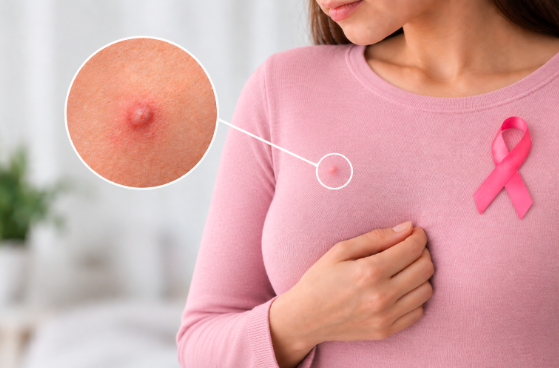
It started as something so small that no one worried about it: a pimple-like bump on the breast. My relative thought it was nothing, maybe an ingrown hair, a clogged pore, an insect bite. Life went on.
Weeks later, it began to hurt. Then the pain spread. Then she could barely lift her arm on that side. By the time she saw a doctor, tests confirmed breast cancer.
This is not a rare story, and it is a real breast cancer story of being diagnosed late that plays out for women all around us, right now, often silently, because a small skin change is dismissed as “just a pimple.” This guide exists so fewer women have to go through what she did. It covers everything about breast cancer: what to look for, when to worry, how self-exams and regular check-ups matter, which tests doctors use, and how breast cancer is actually diagnosed and treated.
Medical disclaimer: This article is for education only and does not diagnose anyone. Most breast lumps and skin changes are not cancer. But the only way to know is to get it checked by a doctor. If you notice any of the signs below, please don’t wait.
How Common Is Breast Cancer? (The Numbers Everyone Should Know)
- Breast cancer is the most common cancer in women worldwide, aside from skin cancers.
- About 1 in 8 women in the U.S. will be diagnosed with breast cancer in their lifetime.
- Breast cancer can occur at any age, but risk increases with age, especially after 50, though younger women are diagnosed too.
- Men can get breast cancer too, though it is rare (roughly 1 in 833 lifetime risk).
- When caught early, at the localized stage, the 5-year breast cancer survival rate is around 99%. That’s why early detection saves lives.
- Roughly 80% of breast lumps are not cancer — but that does not mean you should ignore one. Only a doctor can tell the difference.
“It Was Just a Pimple”: A Common Breast Cancer Warning Sign Mistake
Is a pimple on my breast normal? In most cases, yes. A small bump near the nipple or on the breast skin can look exactly like an ordinary pimple, ingrown hair, insect bite, or blocked oil gland, and most of the time it genuinely is one of these harmless things. But every year, some women discover that their own pimple on breast turned out to be cancer after a bump like this did not heal or go away.
But some breast cancers, especially inflammatory breast cancer (IBC), do not present as a typical lump at all. Instead, the inflammatory breast cancer early signs are visible skin changes that can be mistaken for something minor:
- A small, firm, pimple- or boil-like bump
- Redness or a rash-like patch
- Skin that looks pink, purple, or bruised without injury
- Swelling that makes the breast look bigger
- Skin that becomes thick, pitted, and dimpled, often described as orange peel skin breast cancer, or medically called “peau d’orange”
- Warmth or heaviness in the breast
- The breast feeling tender, itchy, or sore
These breast skin changes cancer warning signs are easy to miss precisely because they look cosmetic rather than medical. The frightening part is that inflammatory breast cancer often does not show up on a standard mammogram or ultrasound in its early stages, and it usually does not cause a distinct lump. It can also develop and spread quickly, sometimes over weeks. This is why any sudden, unexplained change to breast skin should be checked immediately, not “watched” for months.
Why the arm pain and reduced arm movement happened?
When breast cancer spreads to nearby lymph nodes (small immune glands under the arm and around the collarbone), it causes the lymph node swelling under arm breast cancer is known for, along with pain and stiffness that make it difficult to move the arm normally. This combination of breast pain and swollen arm cancer warning sign, especially alongside a breast change, is a signal that needs urgent medical evaluation, not home remedies.
Breast Cancer Warning Signs: The Full List
Not every breast cancer looks the same, and it helps to know the full range of breast cancer symptoms besides a lump, not just the “classic lump”:
- A new lump or thickening in the breast or underarm (armpit), often but not always, painless
- Swelling of part or all of the breast, even without feeling a distinct lump
- Skin irritation, dimpling, or puckering (the “orange peel” look)
- Redness, a rash, or flaky/scaly skin on the breast or nipple
- Nipple pain, or the nipple turning inward (retraction)
- Nipple discharge other than breast milk, especially if it is bloody or clear and spontaneous, since a nipple discharge breast cancer sign is one of the lesser-known warning signs
- Any change in the size, shape, or contour of one breast compared to the other
- Pain in any area of the breast that does not go away
- A lump or swelling in the armpit or near the collarbone, even if the breast itself feels normal
- Pain, heaviness, or reduced arm mobility on one side (can indicate lymph node involvement)
Important: Having one or more of these does not automatically mean cancer. Cysts, fibroadenomas, infections (mastitis), hormonal changes, and normal breast lumpiness are all common and usually harmless. But only a doctor with the right tests can tell the difference, never assume it away.
When Should You Worry About Breast Cancer? A Simple Rule of Thumb
Knowing when to worry about a breast lump is straightforward. See a doctor within days, not months, if you notice:
- A new lump, thickening, or skin change that does not go away after one full menstrual cycle
- Any skin change that looks like a pimple, rash, redness, or dimpling that persists, spreads, or worsens
- A lump combined with pain, swelling, or heat in the breast
- Nipple discharge (especially bloody)
- Nipple pulling inward when it never did before
- Swelling or a lump under the arm
- Pain that spreads to the shoulder, arm, or collarbone
- Sudden change in breast size, shape, or symmetry
- Any change that develops rapidly, over days to a couple of weeks
Go immediately (same day) if the breast becomes suddenly red, hot, swollen, and painful, with or without fever — this needs to be checked urgently to rule out inflammatory breast cancer or a serious infection needing antibiotics.
Why Breast Cancer Self-Examination Matters
If you have searched for how to do a breast self-exam step by step, you have probably found conflicting advice. Here is the honest picture:
- Major health bodies no longer formally require a strict monthly self-exam technique as a proven breast cancer screening tool on its own, because studies show it does not reduce deaths when used alone.
- However, becoming familiar with how your breasts normally look and feel sometimes called “breast self-awareness,” is still strongly encouraged, because it helps you notice changes early and get them checked sooner. Many women, including the case in this article, discover something wrong precisely because they knew what their body normally looked like.
- Self-exams are not a replacement for mammograms, but they are a free, zero-cost habit that puts you in control of your own breast cancer risk.
How to Do a Breast Cancer Self-Check (Step by Step)
Best time: A few days after your period ends, when breasts are least tender and swollen. Postmenopausal women can pick any consistent date each month.
- Look in the mirror, arms relaxed at your sides. Check both breasts for any change in size, shape, contour, dimpling, redness, or skin texture.
- Raise your arms overhead and check again for the same changes, plus any pulling or puckering of the skin.
- Press your hands on your hips, flexing your chest muscles, and check again for changes.
- Lying down, use the pads of your three middle fingers to check the entire breast and armpit area in a circular pattern, using light, medium, and firm pressure, covering the whole breast from collarbone to bra line, side to side.
- Standing or in the shower, repeat the same finger technique, as skin is slippery and easier to examine when wet.
- Check the nipple by gently squeezing to see if there is any discharge.
- Note what’s normal for you. Breasts naturally feel lumpy, and their texture varies with your cycle, weight changes, and age. You are looking for new, persistent, or asymmetric changes, not comparing yourself to anyone else.
If you find anything unusual, don’t panic, and don’t wait, book an appointment.
Why Regular Breast Cancer Check-Ups Matter
Self-exams are not enough on their own. Regular professional check-ups catch things a self-exam simply cannot:
- Clinical breast exam: A doctor or nurse examines your breasts and lymph nodes, trained to detect subtle changes.
- Mammogram: An X-ray of the breast that can detect tumors years before they can be felt. Mayo Clinic and the American Cancer Society recommend most women begin annual mammograms starting around age 40, or earlier if you have higher risk factors; talk to your doctor about the right age and frequency for you.
- Recognizing breast cancer signs in your 20s and 30s matters too, since younger women are sometimes told a lump is “probably nothing because of your age” and delay getting checked. Full-body check-ups matter because breast cancer can sometimes be found alongside other health issues (thyroid problems, hormonal imbalances, weight changes) that a general physician might flag during a routine visit, and because cancer can occasionally spread to lymph nodes, bones, or other organs before the primary tumor is obvious. Routine blood work and physical exams are part of a complete safety net.
- Genetic counseling and testing (BRCA1/BRCA2) should be considered if you have a strong family history of breast or ovarian cancer.
In summary, self-awareness helps you notice suspicious changes, but mammograms and clinical exams can detect what you might miss.
What to Do If You Notice Breast Cancer Warning Signs
- Don’t self-diagnose off the internet: It is natural to search for symptoms, but only a doctor and proper imaging can tell you what it actually is.
- Book an appointment with a physician or gynecologist promptly: Describe exactly what you noticed and when it started.
- Don’t let embarrassment or fear delay you: Many women avoid getting checked out of fear of what they’ll find. Early-stage breast cancer has dramatically better outcomes than cancer caught late.
- Bring a list of your symptoms, when they started, and any family history of breast or ovarian cancer to your appointment.
- Follow through on referrals: If your doctor recommends imaging or a biopsy, do not skip or delay it.
How Doctors Diagnose Breast Cancer: Tests You May Need
This section has the breast cancer diagnosis tests explained simply, from the first physical exam to imaging and biopsy, so you know what to expect at each step.
1. Clinical breast exam
A physical exam of the breasts and surrounding lymph nodes (armpit, collarbone) by a doctor.
2. Imaging tests for breast cancer
- Mammogram: X-ray imaging, the standard first step for most suspicious findings.
- Breast ultrasound: Uses sound waves to determine if a lump is solid or fluid-filled (a cyst), and can help evaluate dense breast tissue.
- Breast MRI: Used in specific situations, such as for women at high genetic risk, or to get more detail on a suspicious area.
3. Biopsy: confirming breast cancer
To understand the breast biopsy types explained below, remember that a biopsy means a sample of breast tissue is removed and examined under a microscope. Common types:
- Fine-needle aspiration biopsy
- Core needle biopsy (most common)
- Surgical (excisional) biopsy
The biopsy tells doctors whether cells are cancerous, and if so, what type and subtype of breast cancer it is. So how early can breast cancer be detected? With regular screening and prompt biopsy of anything suspicious. Many cancers are found at Stage 0 or Stage I, well before they cause symptoms.
4. Hormone receptor and genetic testing for breast cancer
- Estrogen receptor (ER) and progesterone receptor (PR) status determines if hormones fuel the cancer’s growth.
- HER2 status is a protein that, when overexpressed, affects treatment choice.
These results guide which treatments (hormone therapy, targeted therapy, or chemotherapy) will work best.
5. Staging tests for breast cancer
If cancer is confirmed, further tests determine whether and how far it has spread:
- Lymph node biopsy or sentinel node biopsy (checks under-arm lymph nodes)
- CT scan, bone scan, or PET scan (checks for spread to other organs, if indicated)
- Blood tests
Stages of breast cancer (simplified)
Knowing the breast cancer survival rate by stage helps explain why early detection matters so much: survival is highest at Stage 0 and Stage I and generally decreases at each later stage.
| Stage | What it generally means |
|---|---|
| Stage 0 | Noninvasive, cancer cells contained in ducts (DCIS) |
| Stage I | Small, localized tumor, no or minimal lymph node involvement |
| Stage II | Larger tumor and/or spread to a few nearby lymph nodes |
| Stage III | Locally advanced; more extensive lymph node involvement; or larger/skin-involving tumor (this includes most inflammatory breast cancer at diagnosis) |
| Stage IV | Cancer has spread (metastasized) to distant organs such as bones, liver, or lungs. |
Types of Breast Cancer You Should Know
- Invasive ductal carcinoma (IDC): Starts in the milk ducts and spreads into nearby tissue, and it is the most common type of breast cancer.
- Invasive lobular carcinoma (ILC): Starts in the milk-producing glands (lobules).
- Ductal carcinoma in situ (DCIS): Non-invasive, contained within the ducts, and considered the earliest, most treatable form of breast cancer.
- Inflammatory breast cancer (IBC): Rare but aggressive; causes redness, swelling, warmth, and an “orange peel” skin texture rather than a distinct lump. This is the type most often mistaken for a skin infection, pimple, or rash.
- Triple-negative breast cancer: Lacks estrogen, progesterone, and HER2 receptors; tends to grow and spread faster and needs different treatment approaches.
- HER2-positive breast cancer: Grows faster but responds well to targeted therapies.
- Male breast cancer: Rare, but presents with similar warning signs (lump, skin changes, nipple changes) and needs the same urgent attention.
Risk Factors: Why Breast Cancer Happens
Many women only think about family history and breast cancer risk, but as the list below shows, several other everyday factors matter too.
- Age (risk increases as women get older)
- Family history of breast or ovarian cancer, especially a mother, sister, or daughter
- Inherited gene mutations (BRCA1, BRCA2, and others)
- Personal history of breast cancer or certain non-cancerous breast conditions
- Dense breast tissue (also makes mammograms harder to read)
- Early menstruation (before 12) or late menopause (after 55)
- Having children later in life, or never having children
- Hormone replacement therapy (particularly combined estrogen-progesterone, used long-term)
- Obesity, especially after menopause
- Alcohol consumption (risk increases with amount consumed)
- Lack of physical activity
- Radiation exposure to the chest, especially at a young age
- Being female (though men can develop breast cancer too)
Important: If you are wondering about breast cancer without family history, up to 95% of breast cancer cases occur in women with no known hereditary cause, meaning it can happen to anyone, regardless of family history. This is precisely why awareness and screening matter for every woman, not just those considered “high risk.”
Track Your Breast Health with Breast Health Tracker Tool, Not Just Your Worry
Reading about warning signs is only half the job — remembering them, month after month, is the other half. That’s why we built a free tool to make this easier: the Breast Health Tracker.
With it, you can log your monthly self-checks and any symptoms you notice, keep a record of every mammogram, ultrasound, or biopsy, save your doctor’s and surgeon’s contact details in one place, schedule and track upcoming appointments, and generate a clean summary to bring to your next visit.
Can Breast Cancer Be Prevented? What You Can Actually Control
Understanding breast cancer causes and prevention together makes it clear which risks you can lower and which you simply need to monitor through screening.
You cannot control your age, genetics, or family history, but you can lower your breast cancer risk and improve early detection:
- Maintain a healthy weight, especially after menopause
- Exercise regularly and aim for consistent physical activity
- Limit alcohol intake
- Avoid smoking
- Breastfeeding, if possible, has been linked to a modestly lower risk
- Discuss hormone therapy risks and benefits with your doctor if considering it for menopause
- Know your family history and discuss genetic testing if there is a strong pattern of breast or ovarian cancer
- Attend scheduled mammograms as this is the single most powerful early-detection tool available, and when to get a mammogram for the first time is a conversation worth having with your doctor around age 40, or earlier with risk factors
- Practice breast self-awareness monthly
- Don’t ignore skin changes, no matter how small or “pimple-like” they seem
Breast Cancer Treatment Overview
Treatment depends on the type, stage, hormone/HER2 status, and the patient’s overall health. Options include:
- Surgery: Lumpectomy (removing the tumor) or mastectomy (removing the breast), often combined with lymph node removal or biopsy
- Radiation therapy: Used after surgery to destroy remaining cancer cells
- Chemotherapy: Used before or after surgery, especially for more aggressive or advanced cancers
- Hormone therapy: For hormone receptor-positive cancers, blocks or lowers hormone levels that fuel growth
- Targeted therapy: For HER2-positive cancers, targets specific proteins on cancer cells
- Immunotherapy: Increasingly used for certain subtypes, such as some triple-negative breast cancers
A multidisciplinary team, including an oncologist, surgeon, radiologist, and often a genetic counselor, typically works together on the breast cancer treatment plan.
Emotional Impact of a Breast Cancer Diagnosis
A breast cancer diagnosis is frightening, and so is the wait for test results. It is normal to feel fear, anger, denial, or grief. Support matters:
- Lean on family, friends, or a partner
- Join a breast cancer support group (in-person or online)
- Consider counseling, especially during and after treatment
- Remember that survival rates for early-stage breast cancer are excellent, and treatment options today are far more advanced than even a decade ago
Breast Cancer FAQs
Can a pimple on the breast be a sign of breast cancer?
Rarely, but yes, some inflammatory breast cancers begin with a bump that looks like a pimple, boil, or insect bite. If it doesn’t heal, worsens, or comes with redness, swelling, or pain, see a doctor.
What does inflammatory breast cancer look like at first?
It often starts as redness, swelling, warmth, itching, or a pimple-like or rash-like patch, sometimes with skin that looks like an orange peel. It usually does not form a distinct lump and can progress quickly.
Is breast pain a sign of breast cancer?
Breast pain alone is usually not cancer and is more often linked to hormones, cysts, or muscle strain. But pain combined with a lump, skin change, or swelling should always be checked.
Why does my arm hurt on the side of my breast lump?
Pain or reduced movement in the arm can happen if breast cancer has spread to lymph nodes under the arm, causing swelling and stiffness. This combination needs prompt medical evaluation.
At what age should I start getting mammograms?
Most guidelines recommend starting around age 40 for average-risk women, though your doctor may suggest earlier screening if you have a family history or other risk factors.
Are breast self-exams still recommended for detecting breast cancer?
Formal monthly self-exam techniques are no longer required as a standalone screening method, but staying familiar with how your breasts normally look and feel (“breast self-awareness”) is still encouraged to help you notice changes early.
What percentage of breast lumps are cancerous?
About 80% of breast lumps turn out to be non-cancerous (such as cysts or fibroadenomas). Still, every new or changing lump should be evaluated by a doctor.
Can young women get breast cancer?
Yes. While risk increases with age, breast cancer can occur in women in their 20s and 30s, especially with a family history or genetic mutation.
What is the survival rate for early-detected breast cancer?
When detected at the localized stage, the 5-year survival rate is around 99%, which is why early detection through self-awareness and screening is so critical.
Can men get breast cancer?
Yes, though it is rare. Men should also pay attention to lumps, skin changes, or nipple changes in the chest area.
What tests confirm breast cancer?
A biopsy is the only definitive way to confirm cancer. Mammograms, ultrasounds, and MRIs help identify suspicious areas, but tissue must be examined under a microscope to confirm a diagnosis.
Does a lump that hurts mean it is not breast cancer?
Not necessarily. While painless lumps are more classically associated with cancer, painful lumps and skin changes (as in inflammatory breast cancer) can also be cancerous. Pain should never be used to rule cancer out on your own.
Key Takeaways About Breast Cancer
- A “pimple-like” bump on the breast is usually harmless, but in rare cases, it can be an early sign of inflammatory breast cancer, especially if it doesn’t heal, spreads, or comes with redness, swelling, or pain.
- Pain, swelling, or reduced arm movement alongside a breast change can indicate lymph node involvement and needs urgent evaluation.
- Breast self-awareness plus regular mammograms and clinical check-ups together offer the strongest protection against breast cancer.
- Up to 95% of breast cancers happen without a known family history, this can affect anyone.
- Early detection dramatically improves breast cancer survival: close to 99% at the localized stage.
- If you notice any warning sign, don’t wait, don’t self-diagnose, and don’t let fear delay you. See a doctor.
Take the Next Step: Grow Your Breast Cancer Clinic With MedRankSEO
This story is real, and it is far more common than most women realize. Every year, thousands of women dismiss early breast cancer signs as “nothing,” simply because no one told them what to actually look for.
Are you a gynecologist, oncologist, breast health clinic, diagnostic center, or women’s health practitioner? Women are searching Google right now for exactly the answers in this article; the question is whether they’re finding your clinic or someone else’s.
MedRankSEO helps healthcare providers rank higher on Google, attract more patients, and build lasting trust online through medical SEO, content strategy, and local search optimization.
Contact MedRankSEO today for a free SEO consultation and start reaching more patients online.